




Signs Your Baby Is Ready for Shoes
Many parents start shopping for baby shoes the moment those first wobbly steps appear, but timing matters. In the earliest stage, most babies do best barefoot indoors because it helps them grip the floor, balance naturally, and strengthen the small muscles in their feet. Shoes become more important when your child is moving beyond cruising along furniture and starting to walk regularly on outdoor or rough surfaces.
One of the clearest signs your child may be ready for shoes for new walkers is consistency. If your baby takes several independent steps every day, tries to walk from room to room, or wants to stand and move during outings, footwear can help protect their feet without getting in the way of development. Readiness is less about age and more about mobility, confidence, and where they are walking.
Your baby is taking independent steps often, not just once in a while
They want to walk outside, on pavements, or on playground paths
Their feet need protection from heat, cold, or rough ground
They seem steady enough that bulky footwear will not overwhelm their movement
For early walkers, shoes should protect the foot, not control it.
When you begin choosing first walker shoes, think of them as a light layer of protection rather than a tool to teach walking. A flexible, well-fitted pair supports natural movement far better than stiff or heavy styles. That simple shift in mindset helps parents choose smarter from the start.
Soft Soles Versus Structured First Walker Shoes
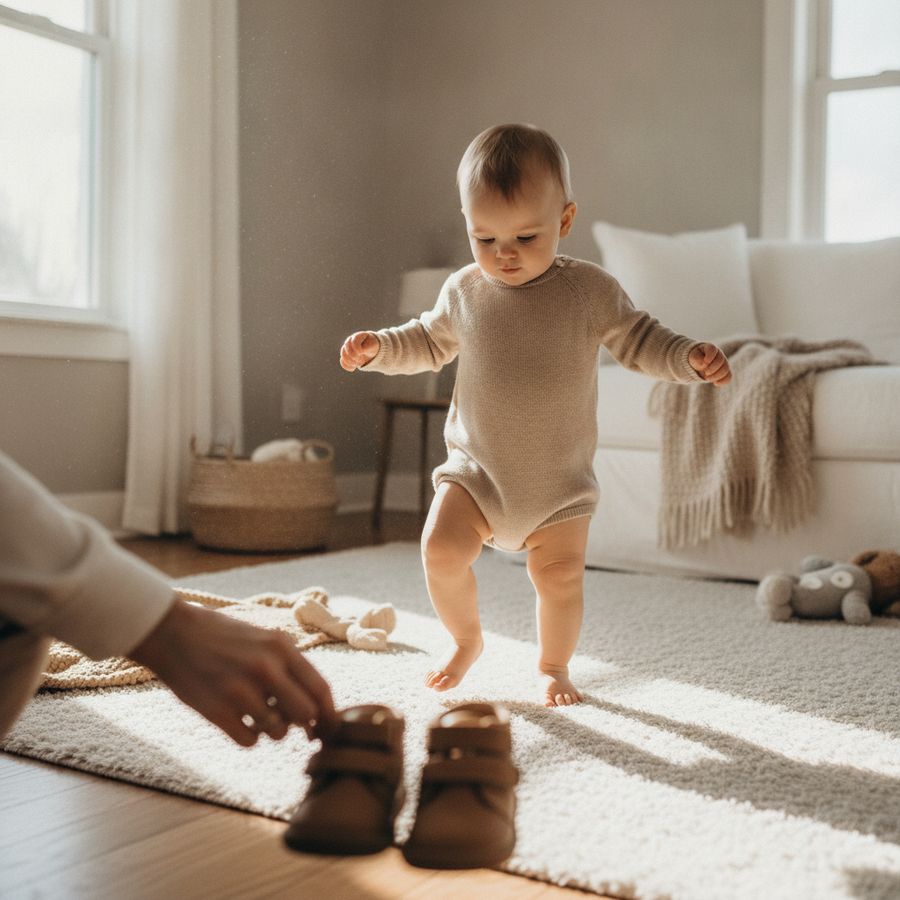
One of the biggest questions parents ask is whether soft sole baby shoes or more structured first walker shoes are better. The answer usually depends on where and how your child walks. For indoor use and very early practice, soft soles are often ideal because they let the foot bend, feel the ground, and move more naturally. They are especially useful for babies who are still crawling, cruising, and taking only a few independent steps.
Structured shoes make more sense once walking becomes more regular outdoors. A good structured first walker shoe should still be flexible through the front, but offer a slightly sturdier sole to protect little feet from rough pavements, damp grass, or uneven surfaces. Structure does not mean stiffness. In fact, overly rigid toddler shoes can make it harder for new walkers to find balance and move comfortably.
When comparing styles, parents should look for a middle ground: shoes that are lightweight, bend at the ball of the foot, and stay secure without squeezing. Breathable materials and a roomy toe box matter more than flashy design details.
The best first walker shoe bends with the foot and protects it from the ground beneath.
If your baby spends most of the day indoors, soft sole baby shoes may be all you need at first. If outdoor walks are part of the daily routine, choose a flexible but protective pair of baby shoes that allows the foot to work naturally while keeping little toes safe.
Common Fit Mistakes Parents Make Early
Even a high-quality pair of baby shoes can be a poor choice if the fit is wrong. One common mistake is buying shoes too large in hopes that a baby will grow into them. Extra space may seem practical, but it can cause tripping, heel slipping, and unstable steps. New walkers need security on the foot, not excess length that changes how they move.
Another frequent issue is choosing shoes by age label alone. Sizes vary widely between brands, and babies’ feet do not all grow at the same pace. Two children of the same age can need very different fits in first walker shoes. Measuring both feet and checking the fit in the actual pair is much more reliable than trusting the number on the box.
Parents also sometimes focus only on length while forgetting width and shape. Some toddler shoes are too narrow at the toes, which can crowd the forefoot and limit natural toe spread. That matters because early walkers use their toes for balance more than many adults realize.
Buying too much extra length
Ignoring width and toe-box shape
Choosing stiff shoes that fight natural movement
Assuming a baby will “break them in” later
A secure fit should feel stable, not tight, and roomy, not sloppy.
Because babies cannot explain discomfort clearly, parents need to watch movement. If your child suddenly crawls instead of walks, pulls at the shoe, or seems less steady, the fit may be the problem. Thoughtful sizing helps shoes for new walkers support confidence rather than interrupt it.
How Much Toe Room Babies Need
Toe room is one of the most important details in baby shoes, yet it is easy to misjudge. Babies need enough space for their toes to spread, grip, and move naturally while learning balance. In most cases, a small amount of growing room at the front is ideal, but too much can be just as unhelpful as too little.
A helpful general rule is to leave roughly a thumb’s width or about 1 to 1.2 centimeters of space from the longest toe to the end of the shoe. That gives room for movement and growth without making the shoe feel loose. Since not all babies have the same foot shape, always check where the longest toe actually sits rather than assuming the big toe is the farthest forward.
It is not only length that matters. The front of first walker shoes should be high and wide enough that the toes are not pressed together. Babies naturally splay their toes when standing, and cramped footwear can interfere with that pattern. A rounded toe box is often a better choice than a pointed or fashion-led shape.
Babies do not need tight shoes to walk well; they need room to use their toes.
Parents can do a quick check by feeling the front of the shoe while the baby stands. If the toes seem jammed, or if the upper material looks stretched across the forefoot, the pair is too small. Well-fitted soft sole baby shoes and toddler shoes should allow natural wiggle, steady steps, and no obvious rubbing at the front.
When Indoor Shoes Make Sense
Not every baby needs shoes around the house, but there are times when indoor footwear is useful. In general, barefoot walking remains excellent for development on clean, safe indoor floors because it gives babies direct feedback from the ground. That sensory input helps them learn balance, coordination, and foot placement. Still, certain home environments make indoor baby shoes or grippy slippers a smart option.
If your floors are cold, slippery, or frequently involve transitions between tile, wood, and rugs, light indoor shoes can add warmth and traction without becoming restrictive. This is where soft sole baby shoes often shine. They are less intrusive than outdoor footwear and can help a new walker feel secure while still allowing the foot to flex and move.
Indoor shoes can also make sense during visits to childcare settings, family homes, or public indoor spaces where going barefoot may not be practical or hygienic. The key is choosing styles that are breathable, lightweight, and easy to remove once they are no longer needed.
Useful on slick or chilly floors
Helpful in shared indoor spaces
Best when lightweight and flexible
Less helpful if they are bulky or stiff
Indoor shoes should feel more like a soft layer than a heavy piece of equipment.
For many families, the best approach is simple: barefoot at home when conditions are safe, and flexible shoes for new walkers when extra grip or protection is genuinely helpful. That balance keeps comfort and development working together.
Simple Checks for Comfort and Support
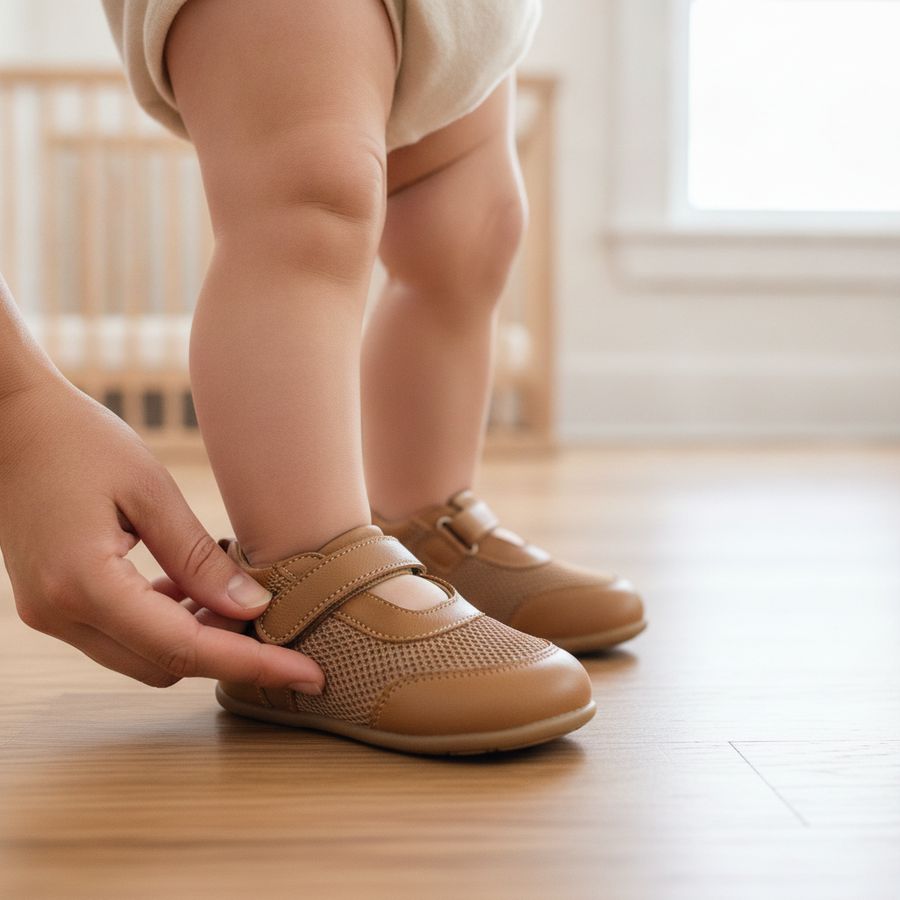
Once you have chosen a pair of first walker shoes, a few quick checks can help you determine if they truly fit your child. Start by putting the shoes on while your baby is standing, not sitting. Standing allows the foot to spread more naturally and provides a better sense of fit. The shoes should stay securely on the feet, with no significant heel slipping, but they shouldn't leave deep marks on the skin.
Next, observe your child as they move. Comfortable baby shoes should allow for a familiar walking pattern. If your baby suddenly takes shorter steps, stumbles more, or refuses to walk, the shoes may be too stiff, too heavy, or simply the wrong fit. New walkers often express discomfort through behavior long before they can articulate it.
You can also use your hands to assess support. Press the toe area to ensure there's enough room, bend the sole to check for flexibility at the ball of the foot, and feel inside for any rough seams. The heel area should feel stable, but the shoe shouldn't be hard like a boot. Well-designed toddler shoes support movement by allowing the foot to move naturally rather than forcing it into a specific position. For a great selection of shoes, check out our shop here.
Good support for early walkers comes from flexibility, security, and comfort working together.
Finally, recheck fit often. Babies grow quickly, and a pair that worked a month ago may already feel snug. Regular checks help ensure that soft sole baby shoes and outdoor walker styles continue to protect little feet while letting those exciting first steps develop naturally.