




Overview of Montessori Toys by Age
Montessori toys by age are designed to match a child’s natural stage of development rather than overwhelm them with lights, sounds, or too many features. The Montessori approach values simple, purposeful materials that encourage babies and toddlers to explore independently. Instead of passive entertainment, these toys support hands-on learning, concentration, and confidence through repetition.
When parents choose Montessori toys, the goal is not to buy more toys, but to choose better ones. Age-appropriate materials help children practice the exact skills they are developing at that moment, whether that is grasping, tracking, stacking, sorting, or problem-solving. This makes play more meaningful and often more calming for both children and caregivers.
For babies, the best baby toys usually support sensory discovery, hand-eye coordination, and early movement. For toddlers, the focus shifts toward fine motor control, sequencing, concentration, and practical life skills. A well-chosen toy should invite action and curiosity without doing all the work for the child.
Montessori play is about giving children the right challenge at the right time
As you explore Montessori toys by age, think about your child’s current interests and abilities. A toy that is just slightly challenging can hold attention far longer than one that is too easy or too advanced. With thoughtful choices, even a small collection of wooden toys and simple learning materials can create rich opportunities for growth.
Best Montessori Toys for Babies 0-12 Months
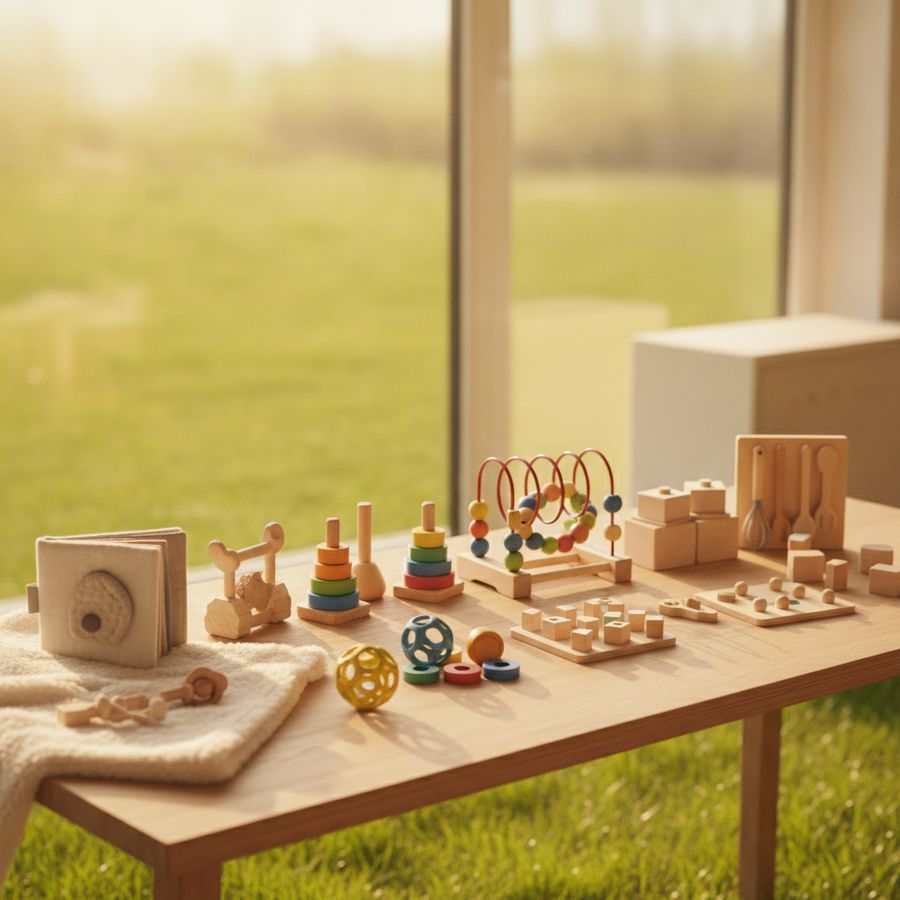
During the first year, babies learn through movement, touch, sight, and repetition. The best Montessori toys for this age group are simple, safe, and easy to explore with the hands and mouth. Instead of flashy electronic baby toys, Montessori-inspired options help infants build focus while discovering how their bodies and senses work.
In the early months, visual mobiles, grasping toys, soft rattles, and interlocking discs are excellent choices. As babies grow, they often benefit from toys that encourage reaching, transferring objects from one hand to the other, and understanding cause and effect. By the second half of the first year, object permanence boxes, simple stacking rings, and ball trackers can support deeper concentration and coordination.
- Black-and-white visual cards or mobiles for early visual tracking
- Wooden grasping beads or rings for hand strength
- Soft rattles for sound awareness and movement
- Object permanence boxes for problem-solving
- Stacking or nesting toys for coordination
Wooden toys are especially popular in Montessori homes because they are durable, tactile, and often less overstimulating. That said, what matters most is whether the toy supports real development. A baby does not need dozens of options. A few carefully selected Montessori toys by age can offer more value than a crowded toy bin.
For infants, the best toy often does one thing well and leaves room for discovery
Toys That Support Toddler Focus and Coordination
As children move into toddlerhood, their play becomes more intentional. They want to repeat tasks, test independence, and master movements with their hands and bodies. The best toddler toys in a Montessori-style environment are those that build concentration while supporting fine motor and gross motor development.
Stacking toys, shape sorters, peg boards, posting activities, simple puzzles, and child-sized practical life tools all help toddlers strengthen coordination. These activities encourage children to use both hands together, refine wrist movement, and practice control. They also help toddlers learn to persist through a challenge instead of expecting instant results from a toy.
Some of the most effective Montessori toys for this stage are open-ended enough to grow with the child but structured enough to offer a clear purpose. For example, a ring stacker can begin as a simple placing activity and later become a lesson in size order, sequencing, or color recognition. Toys with real function tend to hold a toddler’s interest longer than novelty items.
- Chunky knob puzzles for hand control
- Shape sorting boxes for spatial reasoning
- Stacking blocks for balance and coordination
- Threading toys for precision and focus
- Practical life sets like scooping or pouring tools
Toddlers build confidence when play invites repetition, movement, and real effort
Choosing age-appropriate Montessori toys by age helps toddlers stay engaged without becoming frustrated. The right materials turn everyday play into meaningful skill-building.
Wooden Toys vs Plastic Learning Toys
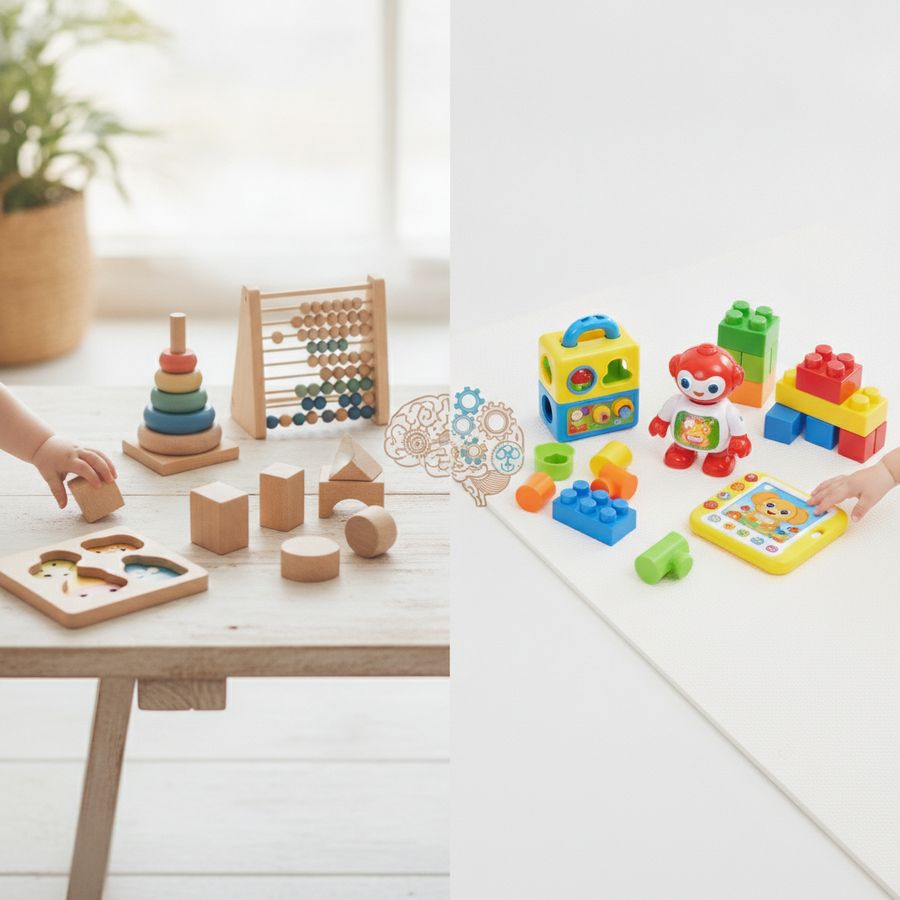
Many parents comparing wooden toys and plastic learning toys are really asking a bigger question: which type of toy helps children learn best? In Montessori environments, wooden materials are often preferred because they are simple, sturdy, and sensory-rich. They allow children to feel weight, texture, temperature, and shape more clearly than many plastic alternatives.
Another advantage of wooden toys is that they tend to be less distracting. Without flashing buttons, loud music, or excessive colors, the child can focus on the task itself. This supports deeper concentration, which is a core part of Montessori learning. A child stacking blocks or fitting puzzle pieces is doing the thinking and problem-solving, rather than reacting to built-in entertainment.
That said, not all plastic baby toys or toddler toys are poor choices. Some well-designed plastic toys can still be developmentally appropriate, especially for bath play, outdoor use, or specific sensory experiences. The key is to evaluate the toy’s purpose. Ask whether it encourages active engagement, independence, and coordination, or whether it mainly performs for the child.
The material matters, but the toy’s purpose matters even more
When selecting Montessori toys by age, choose quality over quantity. A small number of thoughtfully made toys, whether wood or plastic, is usually more beneficial than a large collection of overstimulating options. In many homes, a balance works well, but simple, purposeful toys often deliver the most lasting value.
How to Rotate Toys Without Clutter
One of the easiest ways to make Montessori toys feel fresh and engaging is through toy rotation. Instead of putting every baby toy or toddler toy out at once, keep only a limited number available and store the rest neatly away. This reduces visual clutter, supports focus, and helps children use materials more intentionally.
A good starting point is to display just a few activities at a time, often around six to ten depending on the child’s age and your space. Place them on low shelves where the child can see and reach them independently. Include a mix of skill types, such as one toy for fine motor practice, one for problem-solving, one for language or sensory play, and one for movement or practical life.
Rotate toys based on observation rather than a strict schedule. If a child has lost interest, mastered a skill, or seems frustrated, it may be time to swap in something different. If they are deeply engaged with a toy, keep it out longer. Montessori principles encourage following the child, and toy rotation works best when it reflects real developmental needs.
- Keep only a small selection on display
- Store extras in labeled bins or baskets
- Rotate by interest, not just by calendar
- Remove broken or rarely used items
- Choose toys that match current abilities
A calm play space helps children notice, choose, and use toys with greater focus
With fewer, better choices, Montessori toys by age become easier to manage and more effective in everyday play.
Conclusion on Choosing Age-appropriate Montessori Toys
Choosing age-appropriate Montessori toys does not have to be complicated. The most important step is to look for toys that match your child’s current stage of development and invite active, purposeful play. Whether you are shopping for infant baby toys or skill-building toddler toys, simpler options often create the richest learning experiences.
A strong toy collection does not need to be large or expensive. In many cases, a few carefully selected wooden toys, basic puzzles, stacking materials, or practical life tools will do more for concentration and coordination than a room full of noisy gadgets. When toys are chosen thoughtfully, children are more likely to return to them again and again, building mastery through repetition.
Remember that the best Montessori toys by age support independence, movement, and curiosity. They should be challenging enough to encourage growth, but not so difficult that they lead to constant frustration. Watching how your child interacts with different toys can tell you far more than any label on the box.
The right toy meets the child where they are and gently supports what comes next
By focusing on quality, purpose, and developmental readiness, parents can create a play environment that feels calm, intentional, and full of opportunity. That is the heart of Montessori play, and it is what makes these toys such a valuable choice for babies and toddlers.